Technology
Archived — This article has been archived. The information may be outdated.
Hubble finds Andromeda's star formation slowing sharply
India Today··29 Jul
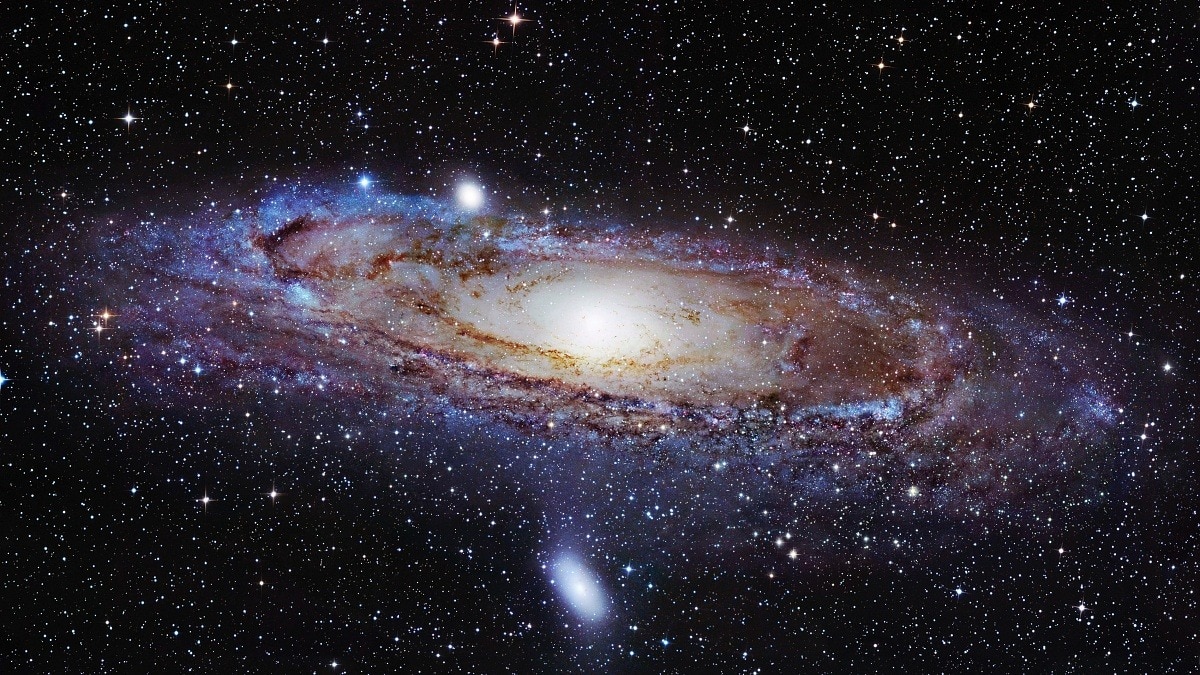
A new Hubble Space Telescope study finds that star formation in the Andromeda galaxy has slowed sharply over the past 500 million years, with the decline becoming much steeper in the last 40 million years. Astronomers tracked roughly 200 million individual stars across two thirds of Andromeda's disk to measure how quickly new suns are forming.
Prism
What It Means For You
- Space enthusiasts and students get a clearer, data backed picture of how a galaxy similar in size to the Milky Way changes over time.
- The research offers a preview of the kind of star forming slowdown our own Milky Way galaxy may eventually experience.
- Anyone curious about the night sky can now trace the actual Hubble evidence behind headlines about a slowing neighbouring galaxy.
What's Happening
- A Hubble Space Telescope study found that star formation in the Andromeda galaxy has declined sharply over the past 500 million years.
- The decline has become far steeper in just the last 40 million years, based on tracking roughly 200 million individual stars.
- Researchers examined two thirds of Andromeda's disk to measure how quickly new stars are still forming across the galaxy.
A Merger's Fading Afterglow
- Andromeda saw a burst of star formation about 2 billion years ago, likely triggered by a past merger with another galaxy.
- Most of that recent star birth is concentrated in a ring roughly 32,000 light years from Andromeda's centre.
- Regions near Andromeda's satellite galaxy M32 show reduced star formation beginning around 60 million years ago, researchers found.
all-newsdaily-roundup