Education & Career
Archived — This article has been archived. The information may be outdated.
What makes the Andromeda Galaxy worth studying
Insights on India··29 Jul
The Andromeda Galaxy, or M31, is a massive barred spiral galaxy about 2.5 million light years from Earth, the nearest major spiral neighbour to the Milky Way. It spans more than 220,000 light years and holds an estimated 1 trillion stars, making it visible to the naked eye under dark skies without a telescope.
Prism
What It Means For You
- Students preparing for competitive exams get a compact backgrounder on Andromeda, a recurring current affairs topic tied to recent Hubble findings.
- Anyone curious about the night sky learns the galaxy is visible to the naked eye under dark skies, a rare chance to see another galaxy directly.
- Readers tracking space research see how a single galaxy's data helps scientists refine models used to study galaxies far too distant to observe in detail.
What's Happening
- The Andromeda Galaxy, also called M31, is a barred spiral galaxy about 2.5 million light years away and the nearest large spiral to the Milky Way.
- It spans over 220,000 light years, roughly twice the Milky Way's width, and contains an estimated 1 trillion stars.
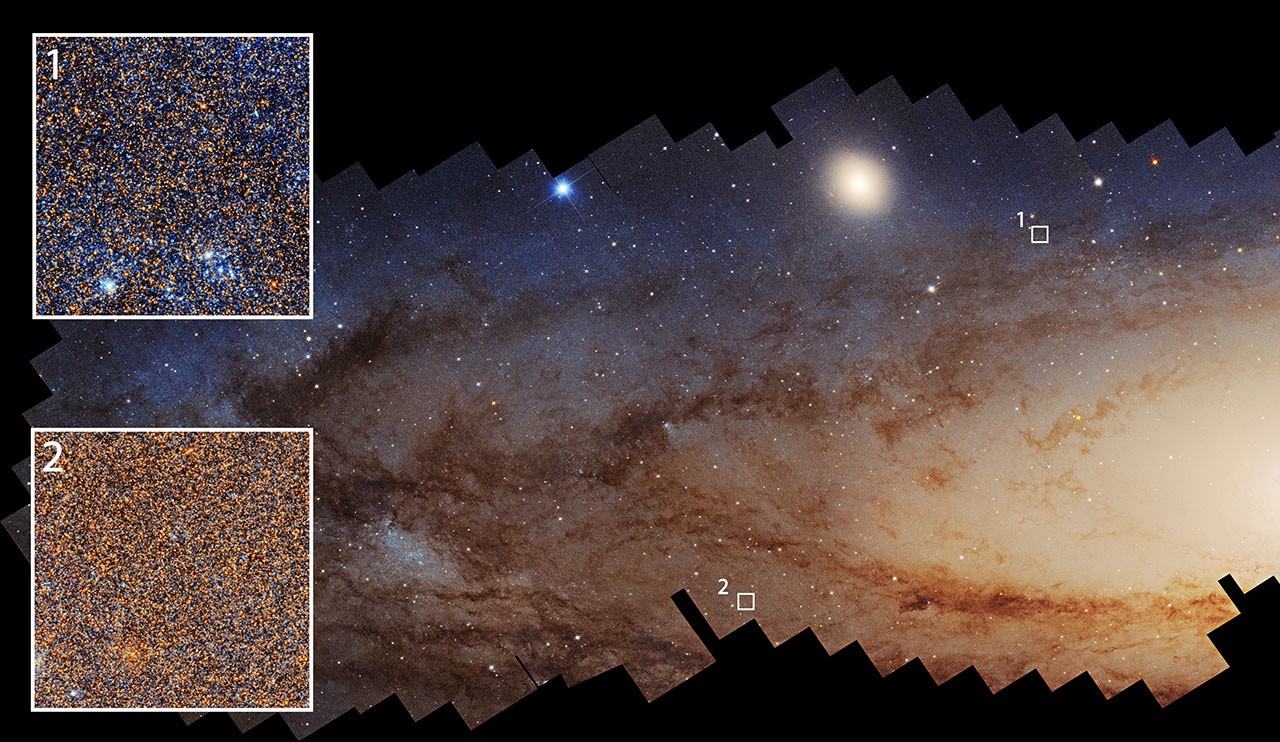
- Recent Hubble Space Telescope data shows its star formation rate has dropped sharply over the past 500 million years, especially in the last 40 million.
A Cosmic Merger Still To Come
- Andromeda hosts distinct ring shaped dust structures at radii of 26,000 and 33,000 light years, where most remaining star formation is concentrated.
- Gravitational interaction with its satellite galaxy M32 has disrupted dust clouds, creating a dead zone with little recent star birth.
- Andromeda is moving toward the Milky Way at about 110 kilometres per second and the two are expected to merge in 4 to 10 billion years.
all-newsdaily-roundup