Lifestyle
Archived — This article has been archived. The information may be outdated.
India's hepatitis programme nears its 2030 elimination goal
PIB India··29 Jul
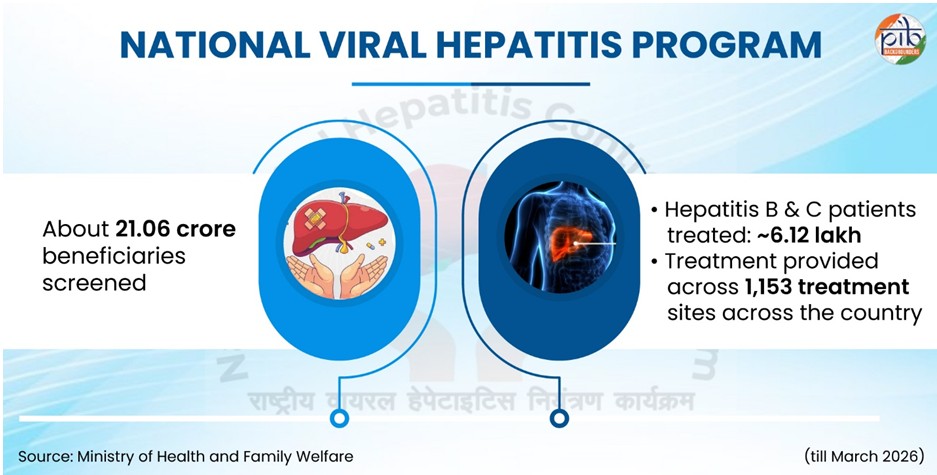
India's National Viral Hepatitis Control Programme aims to eliminate hepatitis as a public health threat by 2030, linking with immunisation, HIV and tuberculosis services nationwide. Government surveillance data found about 0.85 percent of people testing positive for hepatitis B and 0.29 percent for hepatitis C. Newborns receive a hepatitis B vaccine dose within 24 hours of birth.
Prism
What It Means For You
- Free hepatitis B and C testing and treatment are available at government health centres for anyone who wants to check their status.
- Pregnant women are screened for hepatitis B under maternal health programmes, and newborns get a vaccine dose within 24 hours of birth.
- Healthcare workers and other high risk groups can access dedicated screening and vaccination through the National AIDS Control Programme.
What's Happening
- India launched the National Viral Hepatitis Control Programme in 2018 to offer free screening, diagnostics and drugs nationwide for hepatitis B and C.
- Government surveillance data found roughly 1 in 118 people tested positive for hepatitis B and 1 in 345 for hepatitis C.
- Services are expanding from district hospitals to local health centres, supported by a toll free helpline at 1800-11-6666.
Why Two Viruses Get Different Treatment
- Hepatitis A and E spread mainly through contaminated food or water and are usually self limiting without specific antiviral treatment.
- Hepatitis B spreads mainly from mother to child at birth or through blood, and its vaccine also protects against related hepatitis D infection.
- Hepatitis C, once incurable, is now cured in 12 to 24 weeks in nearly all patients using modern antiviral drug regimens.
all-newsuplifting